NEWS

Special Protection Systems (SPS) are getting more and more important for the reliability and stability of power grids.

Turkmenenergo, the TSO of Turkmenistan, decided to design and implement an SPS system at the substation of 1574 MW Kyanly NGCC Power Plant.

Çalık Energy, the contractor of the power plant, preferred quality of Epra Energy in the design of the SPS.

Our team will perform advanced power system analyses with #DIgSILENT #PowerFactory in the scope of the design including:

  • Update the static & dynamic models of the Turkmenistan high voltage grid
  • Validation of the updated model via SCADA and relay recordings
  • Load flow & N-1 contingency & short-circuit simulations
  • RMS dynamic stability simulations
  • Identification of critical contingencies
  • Identification of SPS functional requirements
  • Determination of triggering conditions of the SPS
  • Identification of corrective actions
  • Design of logic diagrams and setpoints of the SPS
  • Development of functional logic diagrams
  • Validation of the SPS functionality via computer simulations for the critical contingencies
  • Preparation of implementation-ready setpoint tables for the SPS

Our experts will also provide capacity building trainings to Turkmenenergo engineers on modelling and grid analysis to be performed in the scope of an SPS design.

We are happy to contribute reliability and stability of power grids worldwide.

We are qualified for another exciting project with Intec: “Grid Code Compliance Analyses of 50 MWp Shams PV Solar Power Plant in Azerbaijan”.

The project includes the following modelling & simulations:

• Grid Impact

• Grid Code Compliance

• Earthing • Insulation Coordination

• Lightning Risk

• Protection Coordination

We are happy to contribute secure and reliable connection of renewables to Azerbaijan power grid. buna uygun da haber başlığı bul

Power grid stability is among the most critical concerns in opening floors to large amount of renewable energy sources.

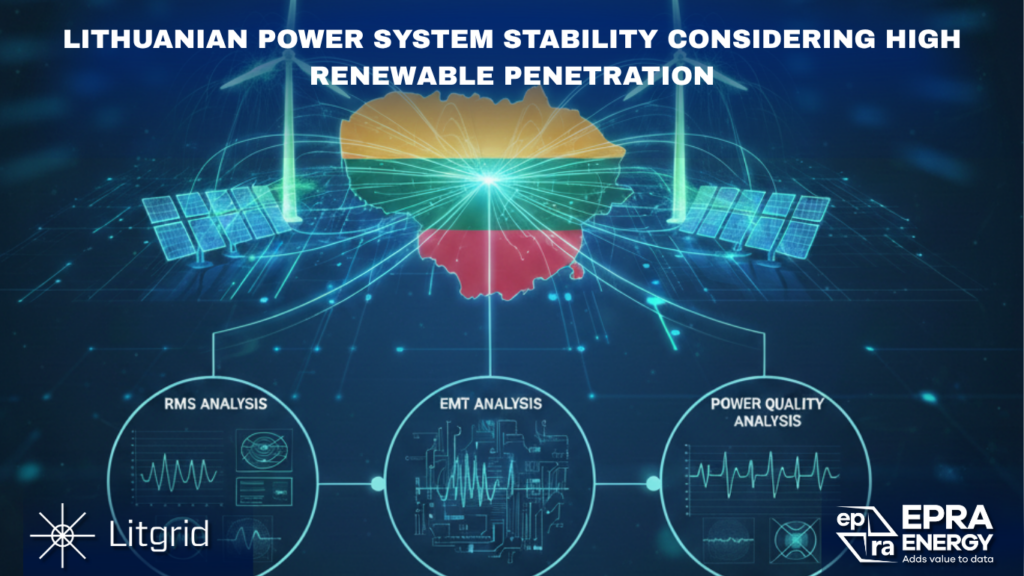
In order to deeply analyse this concern, LitGrid, TSO of Lithuania, is starting a new project: “LITHUANIAN POWER SYSTEM STABILITY CONSIDERING HIGH RENEWABLE PENETRATION”

We are excited to announce that EPRA is qualified by LitGrid in this important project.

The scope of the project includes:

• RMS model preparation, validation of merged Baltic Power system model (Lithuania, Latvia, Estonia) & RMS analysis

• EMT model preparation, validation of model & EMT analysis

• Power Quality model preparation & EMT analysis

We will cooperate with PGS Tech on this important project.

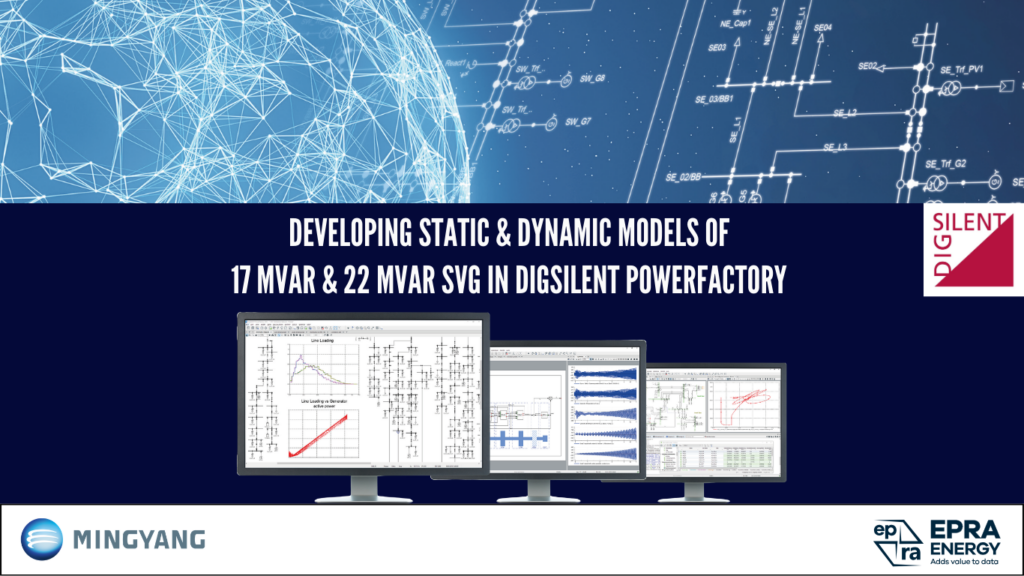
Mingyang preferred the quality of EPRA Energy for modelling its new 17 MVAR & 22 MVAR Static Var Generator (SVG) projects.  

The scope includes: 

  • Developing DIgSILENT PowerFactory models of the SVG controllers, and 
  • Verifications of the models through by comparing simulation and factory test results. 

In the Power System Stabilizer (PSS) Tuning Project of İÇDAŞ Bekirli Thermal Power Plant, the preferred collaboration has been EPRA Energy and JT Systems!

Within the scope of the project, the plant’s AVR & PSS controllers will first be modeled, and model validation will be carried out through step and frequency response tests. Subsequently, PSS controller parameters for both local and inter-area oscillations will be determined on the validated model, implemented in the PSS, and tested for compliance.

We are pleased to be part of this project, which will contribute to the stability of our power system

Within the scope of the IPA-funded project titled “Clean, Affordable and Secure Electricity for All in Light of the European Green Deal”, launched by ELDER under the call “Feasibility and Pilot Applications for the Supply and Demand Side”, ELDER has selected EPRA Energy for its quality and expertise.

Within the scope of the project:

  • A standard “DSO Corporate Carbon Emission Calculation Methodology”, compliant with international standards and applicable by Distribution System Operators (DSOs), will be defined;
  • Using the defined methodology, carbon emissions will be calculated through Key Resource Analysis in pilot DSOs, and a dedicated tool will be developed to standardize these calculations;
  • Consumption profiles of pilot households (both total consumption and appliance-level details) will be recorded and analyzed to identify their demand management and energy efficiency potential.